FREQUENTLY ASKED QUESTIONS
What is FTD?
Frontotemporal Dementia (FTD) is a devastating form of early-onset dementia that varies in each individual. Symptoms of FTD can include changes in personality or uncharacteristic behaviors, progressive loss of language, loss of executive function and cognitive abilities, apathy, and reduced mobility.1-3 FTD causes a substantial reduction in life expectancy, and on average people with FTD die 3-13 years from diagnosis.⁴-7
What is a progranulin mutation?
This is a mutation in the ‘GRN’ gene. Genes are instructions that tell the body’s cells what to do. Sometimes, genes contain errors called mutations.
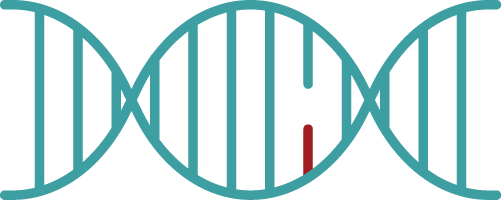

Mutated gene Gene with no mutation
The GRN gene tells the body to make progranulin, which is a protein that plays an important role in the healthy functioning of cells in the brain. When there is mutation in the GRN gene, the body may not make enough progranulin, which can lead to cell death in the brain and the symptoms of FTD.
What is the ASPIRE-FTD Study?
ASPIRE-FTD is a Phase 1/2 open-label, multi-center study designed to evaluate the safety and preliminary efficacy of AVB-101 in patients with FTD-GRN. ASPIRE-FTD is the first study of AVB-101 in humans. It aims to evaluate the safety of AVB-101 and measure its effects on progranulin levels and the symptoms of FTD.
Who can participate in the study?
You may be eligible to participate if you meet the following criteria*:
- 30-75 years old
- Diagnosed with FTD-GRN (this will be confirmed with a genetic test)
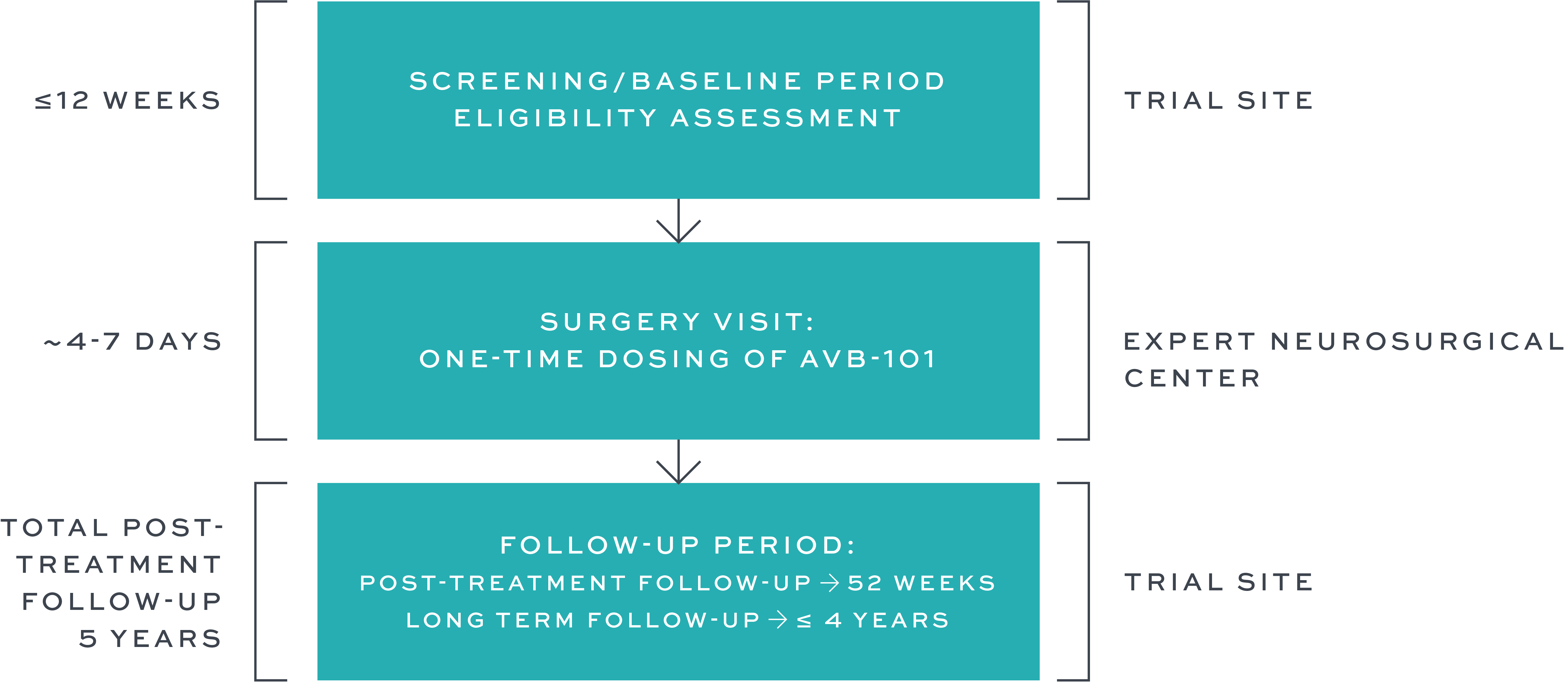
- Have a caregiver who is able to support you (including attending study visits) for the duration of the study (5 years and 3 months)
*Other criteria will also apply.
What are clinical research studies?
Clinical research studies help scientists and doctors investigate whether a new drug or treatment is safe and effective. Before a doctor can prescribe a new drug or treatment, it must go through several phases of clinical research and obtain a license from national authorities. Clinical research is only possible with the help of people who participate in research studies. All study participation is voluntary and if you decide to join a study, you are free to leave at any time.
What is the study treatment?
The study treatment in this clinical research study is AVB-101, an investigational one-time therapy designed to deliver a functional copy of the GRN gene directly to the brain, thereby potentially restoring progranulin levels and stopping disease progression in patients with FTD-GRN. AVB-101 is administered using a neurosurgical procedure directly to the thalamus at expert neurosurgical centers throughout Europe and the United States.
WHY IS SURGERY NEEDED TO DELIVER AVB-101?
AVB-101 is designed to be delivered directly to the thalamus, an information relay hub that distributes signals throughout the brain. Delivering gene therapy to the brain can be challenging because of the blood-brain barrier, which protects the brain by limiting what can pass from the bloodstream into brain tissue.
A minimally invasive neurosurgical procedure is used to deliver AVB-101 directly to the thalamus, bypassing the blood-brain barrier and enabling distribution across the brain. This targeted approach focuses treatment where it is needed the most.
What does study participation involve?
WHY IS THERE AN URGENT NEED FOR FTD RESEARCH?
A strong family history is found in about 30-50% of FTD cases,⁵⁻⁷ and much of the current research focuses on genetic FTD, especially FTD-GRN. People living with FTD are an essential part of the research process to help discover new treatments. Without these individuals and their families, clinical research cannot advance.
Participating in a clinical trial can be a big decision for people with FTD and their families. While study participants may not directly benefit from an investigational treatment in a clinical trial, participating in research may help some people feel like they are contributing to a larger body of research for future generations who might be affected by FTD.
REFERENCES
- Pressman PS and Miller BL. Biol Psychiatry 2014;75:574–81;
- Young JJ et al. Ther Adv Psychopharmacol 2018;8:33–48;
- Hogan DB et al. Can J Neurol Sci 2016;43 Suppl 1:S96–109;
- Onyike CU and Diehl-Schmid J. Int Rev Psychiatry. 2013;25(2):130–137;
- Riedl L et al. Neuropsychiatr Dis Treat. 2014;10:297–310;
- Greaves CV and Rohrer JD. J Neurol 2019;266:2075–86;
- Kuang, L., et. al. Human Molecular Genetics 2020;29(4):624-634.
Contact us
You can contact us by phone or via email.
US/International
+1 (888) 591 8117
UK