About FTD
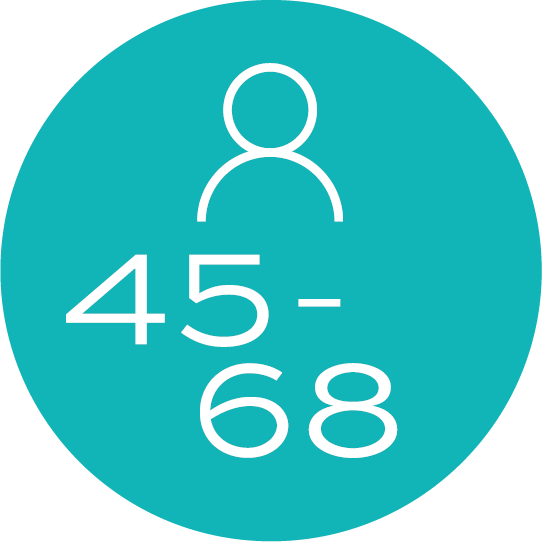
Frontotemporal Dementia (FTD) is a devastating form of early-onset dementia that varies in each individual. Symptoms of FTD can include changes in personality or uncharacteristic behaviors, progressive loss of language, loss of executive function and cognitive abilities, apathy, and reduced mobility.1-3 FTD causes a substantial reduction in life expectancy, and on average people with FTD die 3-13 years from diagnosis.4-7

FTD is a leading cause of dementia in people under the age of 65⁵, with an estimated prevalence at any one time of up to 4.6 cases per 1,000 of the population.⁶

FTD can be separated into familial and sporadic FTD. Sporadic FTD is more common and occurs when only one person in a family has FTD. Familial FTD is an inherited form of the disease. Whilst some familial FTD has no known cause, a strong family history is found in about one-third of cases. The majority of inherited FTD is accounted for by autosomal dominant disease-causing mutations in three genes, including the GRN gene.¹⁰

FTD often presents insidiously and progresses over time, and can be diagnostically challenging. As disease education, genetics knowledge, access to genetic testing and research and treatment options grow, the numbers of diagnosed individuals, as well as those identified to be at-risk, are expected to increase.


Currently there are no disease modifying treatments available for people with FTD.
REFERENCES
- Onyike CU and Diehl-Schmid J. Int Rev Psychiatry. 2013;25(2):130–137;
- Onyike CU. Neuroepidemiology. 2011;37:166–167;
- Riedl L et al. Neuropsychiatr Dis Treat. 2014;10:297–310;
- Pressman P and Miller BL. Biol Psychiatry. 2014;75(7):574–581;
- Hendriks S et al, JAMA Neurol. 2021;78 (9): 1080-1090;
- Hogan DB et al. Can J Neurol Sci. 2016;43 (Suppl 1):S96–S109;
- Moore KM et al. Lancet Neurol. 19(2):145–156;
- Kansal K et al. Dement Geriatr Cogn Disord. 2016;41:109–122;
- Galvin JE et al. Neurology. 89(20):2049–2056;
- Greaves and Rohrer J Neurol. 2019; 266(8): 2075–2086.
- Kuang, L., et. al. Frontotemporal dementia non-sense mutation of progranulin rescued by aminoglycosides. Human Molecular Genetics 2020;29(4):624-634;
Caregiver Stories from the FTD Journey
Hear directly from family members of people affected by frontotemporal dementia (FTD) and learn more about their experiences from receiving a diagnosis through the progression of their loved one’s dementia.
KATIE: DEMENTIA CARE EXPERT, ADVOCATE, AND EDUCATOR
Katie became a caregiver when her husband was diagnosed with FTD at the young age of 29. Learn more about Katie’s experience supporting her husband through his FTD diagnosis while raising a toddler and her dedication to driving awareness and supporting families impacted by this devastating neurodegenerative disease.
Jacquelyn: A daughter’s FTD story
Jacquelyn’s mother’s FTD symptoms began as early as 2013, starting with insomnia, memory loss, and differences in her usual behavior. Hear from Jacquelyn as she recounts her mother’s FTD journey and how their family is navigating this devastating disease together.
Tanya: A wife’s FTD story
Tanya’s husband was a beloved partner, father, and high school history teacher, who ultimately passed away five years after his FTD diagnosis. Learn more about his FTD diagnosis, Tanya’s role as his caregiver, and her mission to raise awareness of FTD.

“It’s heartbreaking to see how fast neurodegenerative diseases, such as ALS and FTD, change the lives of patients, families and caregivers. At AviadoBio, we listen intently to this community and know their input into our work is invaluable. We extend this same compassionate approach to those we work with so everyone can collaborate by sharing their ideas and offering creative solutions.”
Farah Speer
SVP, Communications and External Relations
Contact us
You can contact us by phone or via email.
US/International
+1 (888) 591 8117
UK